
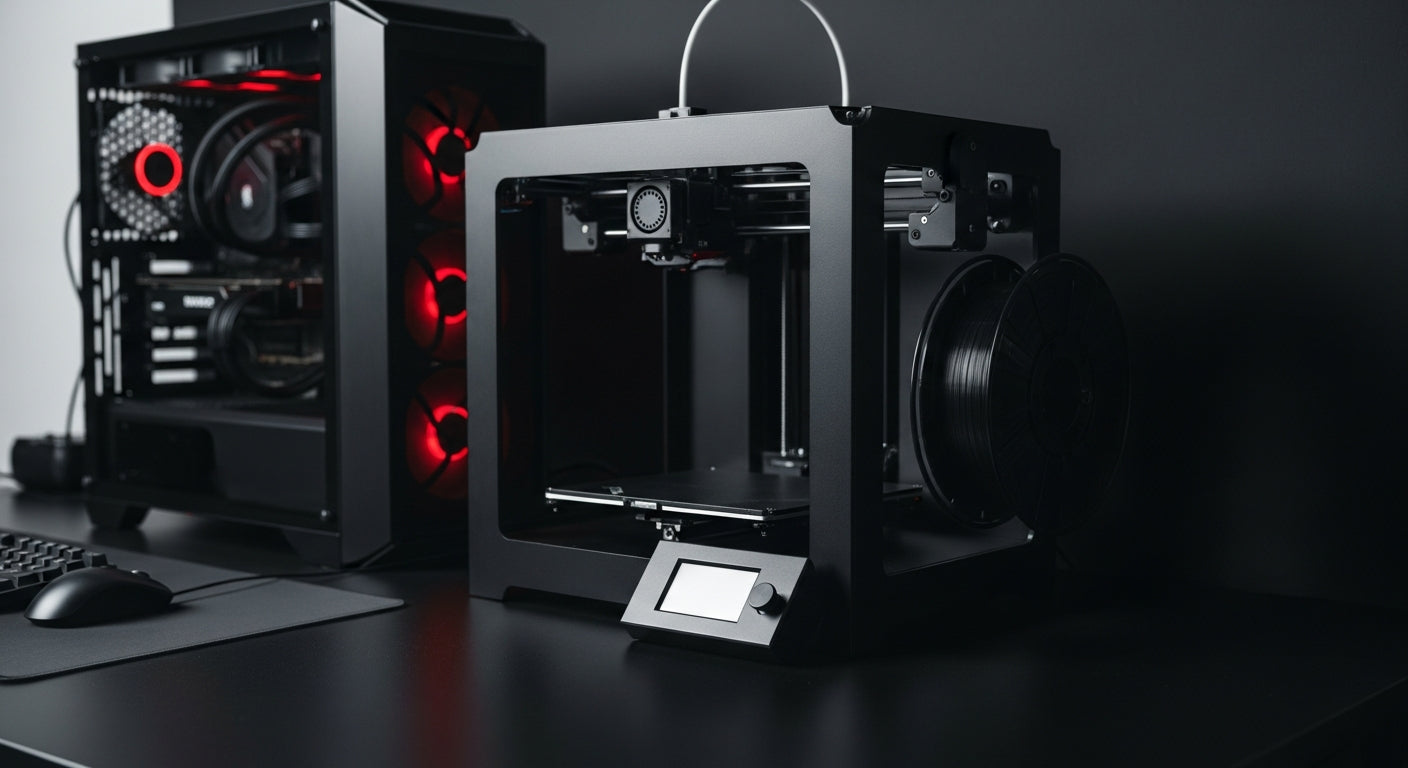
A 3D printer is a revolutionary machine that creates three-dimensional solid objects from a digital design, building them layer by layer using various materials, a process known as additive manufacturing.
Unpacking the 3D Printer Phenomenon
Once considered futuristic, 3D printers have rapidly evolved into indispensable tools across countless industries, from personal workshops to aerospace engineering. These devices empower creators to bring digital concepts into tangible reality with unprecedented flexibility and precision.
What is a 3D Printer?
- It’s a computer-controlled device that constructs objects by adding successive layers of material until the object is complete.
- Unlike traditional subtractive manufacturing (cutting material away), 3D printing is an additive process, minimizing waste.
- The process begins with a 3D digital model, often created using CAD (Computer-Aided Design) software.
How Does 3D Printing Work?
- Design: Create or download a 3D model (e.g., .STL, .OBJ file).
- Slicing: Software slices the model into hundreds or thousands of horizontal layers.
- Printing: The 3D printer reads these layers and deposits, cures, or fuses material precisely according to each layer's shape.
- Post-processing: Finished prints may require cleaning, sanding, or curing to achieve final properties.
The Evolving Landscape of 3D Printing Applications
From rapid prototyping to end-use parts, 3D printers are pushing boundaries across various sectors, demonstrating their versatility and transformative potential.
From Hobbyist Desktops to Industrial Giants
- Consumer Models: Printers like the Bambu Lab A2L are making large-format printing accessible and easy for hobbyists and enthusiasts, expanding home creative possibilities.
- Aerospace Innovation: Relativity Space leveraged 3D printing to create the Terran 1 rocket, proving the technology's capability for complex, large-scale, flight-ready components.
- Military & Marine: The USS Essex is testing additive manufacturing during RIMPAC 2026, showcasing the military's embrace of 3D printing for on-demand parts and supply chain resilience.
- Construction Sector: INSTATIQ's patented concrete printing system demonstrates the potential for building directly against existing structures, tackling difficult architectural challenges with precision.
Advancements in Materials and Techniques
- Research constantly improves material properties, like the PVDF MEX study, which shows significant porosity gains in 3D-printed parts, enhancing performance for specific applications.
- New filaments and resins are continually developed, expanding the range of functional objects that can be produced, from flexible parts to high-strength industrial components.
Why Consider a 3D Printer Today?
- Rapid Prototyping: Quickly iterate designs, test concepts, and reduce development cycles.
- Customization & Personalization: Produce bespoke items tailored to exact specifications, from unique gifts to ergonomic tools.
- On-Demand Manufacturing: Create parts only when needed, minimizing inventory and waste.
- Educational Value: An excellent tool for learning design, engineering, and problem-solving skills.
Whether you're a budding inventor, a small business, or an industrial powerhouse, a 3D printer can unlock new potentials. For the latest 3D printing technology and genuine computer components, Mehta Brothers remains India's premier destination, ensuring you get authentic products with official warranties.
Key Considerations When Buying a 3D Printer
- Print Technology: FDM (Fused Deposition Modeling) for affordability and a wide range of materials; SLA/DLP (Stereolithography/Digital Light Processing) for high detail and smooth finishes.
- Build Volume: How large can the objects you plan to print be?
- Material Compatibility: What types of filaments or resins does it support (PLA, ABS, PETG, Nylon, flexible, etc.)?
- Ease of Use: Consider features like auto-leveling, touchscreen interfaces, and connectivity options.
- Budget & Maintenance: Factor in the cost of the printer, materials, and potential replacement parts.
Our experts at Mehta Brothers are ready to guide you through these choices, ensuring you select the perfect 3D printer that aligns with your specific needs and budget, backed by unparalleled service.
Comparative Table: 3D Printer Applications & Examples
| Application Area | Real-World Example | Key Benefit / Impact |
|---|---|---|
| Hobbyist & Consumer | Bambu Lab A2L | Accessible large-format printing for diverse personal projects. |
| Aerospace Engineering | Relativity Space Terran 1 Rocket | Rapid production of complex, lightweight, and custom rocket components. |
| Defense & Maritime | USS Essex Additive Manufacturing Trials | On-demand creation of critical parts, enhancing supply chain resilience at sea. |
| Construction | INSTATIQ Concrete Printing System | Precise, direct concrete printing for complex or difficult architectural features. |
| Material Science | PVDF MEX Study | Improving properties like porosity in specialized 3D-printed materials. |
Conclusion: The Future is Additive
3D printing is no longer a niche technology; it's a fundamental shift in how we design, produce, and innovate. Its continuous evolution promises even greater efficiency, customization, and groundbreaking applications across virtually every industry. Embracing this technology can open up a world of possibilities for creators and businesses alike.
Frequently Asked Questions (FAQ)
What is the primary function of a 3D printer?
The primary function of a 3D printer is to create three-dimensional physical objects directly from a digital design file by sequentially adding material layers.
What types of materials can 3D printers use?
3D printers can use a vast array of materials including plastics (PLA, ABS, PETG, Nylon), resins, metals, ceramics, composites, food-grade materials, and even concrete, depending on the printer's technology.
Are 3D printers expensive?
The cost of 3D printers varies widely. Entry-level hobbyist models can be very affordable, ranging from ₹15,000 to ₹50,000, while professional and industrial 3D printers can cost several lakhs or even crores, depending on their capabilities and features.
How difficult is it to learn 3D printing?
Learning 3D printing has become significantly easier with user-friendly software and printers. Basic operation and printing pre-made models are relatively simple, while mastering design and troubleshooting requires more practice and dedication.
What is additive manufacturing?
Additive manufacturing is the technical term for 3D printing. It refers to the process of building a three-dimensional object by adding material layer by layer, as opposed to subtractive manufacturing, which removes material from a larger block.
Upgrade Your Setup with Mehta Brothers
Looking for genuine computer components, high-performance gaming gear, or expert custom PC builds? Mehta Brothers is India's trusted destination for authentic tech with official warranties and fast nationwide shipping.
Shop at Mehta Brothers ->
Immersive Audio, Crystal Clear Comms: The Ultimate Gaming Headphone Buying Guide for Indian Gamers & Creators 2026
Cool & Capacious: Top 5 Newly Launched Gaming PC Cabinets for Indian Builders in 2026